Buildings built with tin money and dredger steel · Architecture that remembers the town
Read Takua Pa through the shophouses on Culture Street, Boon Sung Iron Bridge, the governor's residence, and Tao Ming School · The transition embedded in brick, mortar, and steel structures
หากคุณได้เดินผ่านย่านถนนอุดมธาราและศรีตะกั่วป่าในวันนี้ ภาพแรกที่เห็นคือตึกแถวสไตล์ชิโนโปรตุกีสเรียงราย ทางเดินด้านหน้ามีหลังคาคลุมแบบ 'หง่อคาขี่' ที่ช่วยกันแดดและฝนให้ผู้สัญจร มันให้ความรู้สึกเหมือนได้ก้าวย้อนเวลากลับไปในอดีตที่ได้รับการรักษาไว้อย่างดี
But these buildings are not just beautiful backdrops for photography. They are a massive archive recording the changes of Takua Pa in the form of brick, mortar, and steel structures. Each piece of architecture tells the story of a town that grew and prospered through tin mining, water trade, and the blending of people from diverse cultures.
เพื่อให้เข้าใจสถาปัตยกรรมของตะกั่วป่าอย่างลึกซึ้ง เราต้องมองลึกลงไปกว่าความสวยงามภายนอก เราจำเป็นต้องแยกแยะระหว่างสิ่งที่ 'สร้างขึ้นใหม่' กับสิ่งที่ 'ซ่อมแซม' และทำความเข้าใจชั้นของประวัติศาสตร์ที่ซ่อนอยู่ในกำแพงจวนเจ้าเมือง สะพานเหล็กของคนงานเหมือง และโรงเรียนที่สร้างจากเงินบริจาคของพ่อค้า
The governor's residence and the wall that tells of conflict
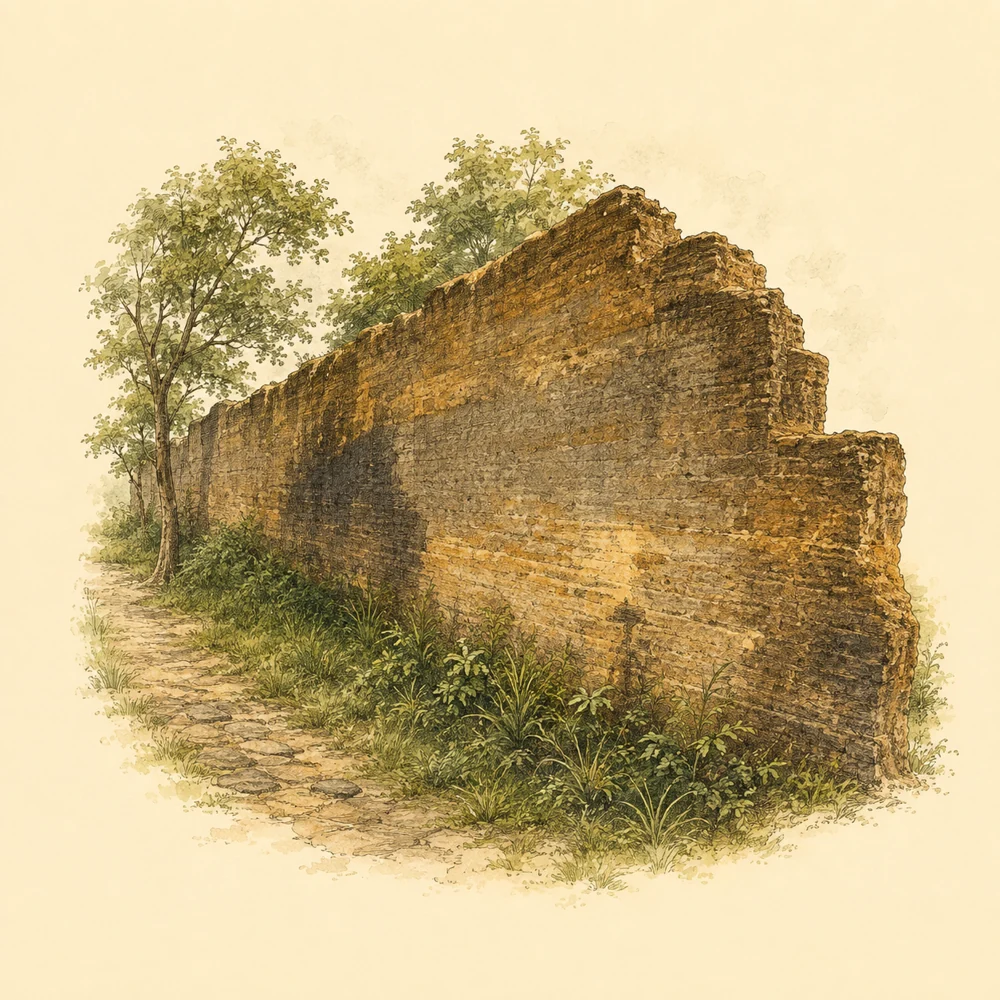
Back in the era when Takua Pa was growing from the tin mining economy and coastal trade, wealth came with conflicts of interest. The wall of the Takua Pa governor's residence was built to act like a camp wall, protecting against danger and serving as a refuge for townspeople. Scholars suggest, though not settled, that this wall was built during the time when Phraya Senanuchit (Nuch Na Nakhon) was the governor between 1840 (2383 BE) and 1881.
The wall was constructed with plaster mixed with gravel and sand, layered with a base wider than the wall itself for stability. The part that remains today is about 5 meters high. The inner area was once divided into a front palace, a main hall, and a rear palace, reflecting the systematic space allocation of the town's rulers in that era.
Important evidence confirming the prosperity of trade in that era comes from the archaeological excavation by the Fine Arts Department in 1999, which found Qing dynasty Chinese ceramics, European ceramics, glassware, and building decorative parts. These items confirm that this governor's residence was once connected to a global trade network.
เมื่อศูนย์กลางเมืองย้ายไปที่เกาะคอเขาและบ้านย่านยาว จวนเจ้าเมืองเดิมจึงหมดบทบาททางการปกครอง แต่ในปัจจุบัน พื้นที่แห่งนี้ได้กลายเป็นโบราณสถานแบบเปิดที่ชุมชนใช้เป็นพื้นที่จัดกิจกรรมทางวัฒนธรรม เช่น งาน 'จากตะโกลา สู่ตะกั่วป่า' ทำให้กำแพงเก่ากลับมามีชีวิตอีกครั้งในฐานะเวทีของเมือง
Architecture is not just a beautiful backdrop. It is an archive recording the changes of Takua Pa in the form of brick, mortar, and steel structures.
The district chief's house in the transition era
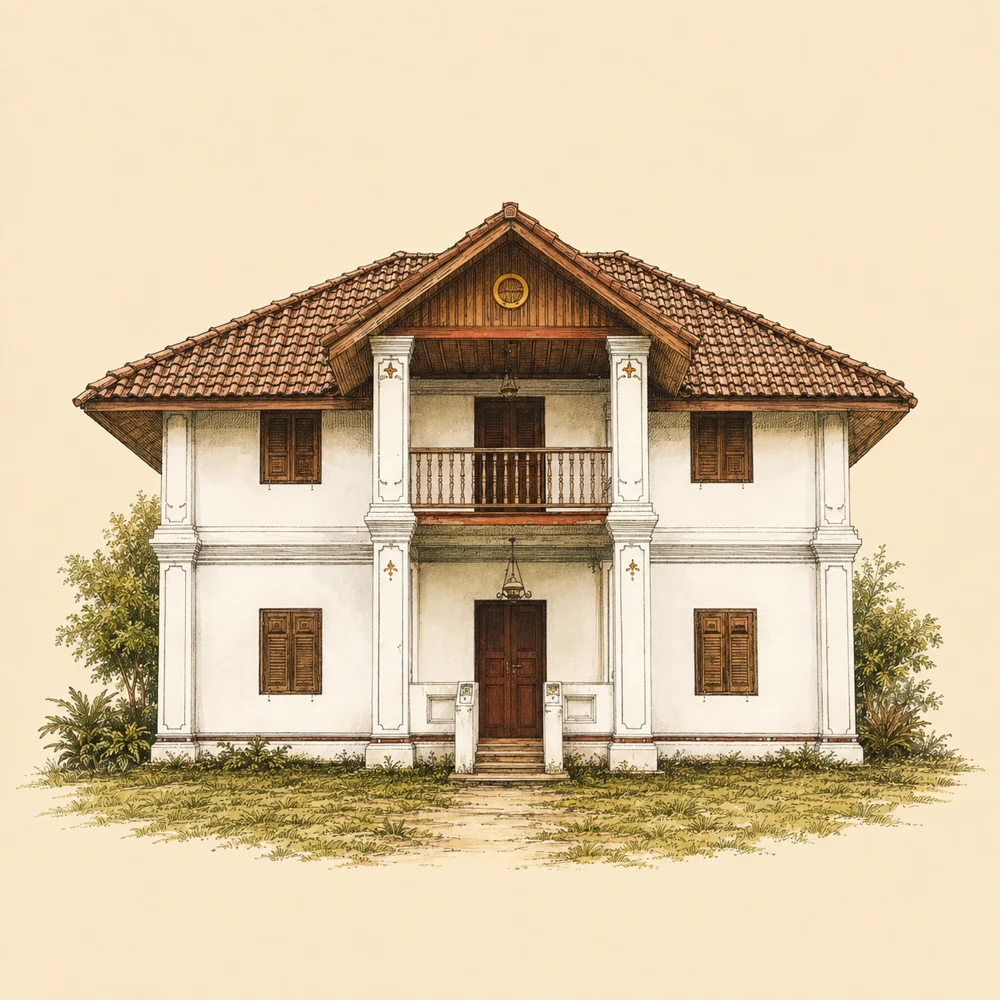
การเปลี่ยนผ่านจากการปกครองระบบเจ้าเมืองเข้าสู่ระบบอำเภอ ถูกบันทึกไว้ในสถาปัตยกรรมของ 'บ้านขุนอินทร์' ตามหลักฐานท้องถิ่น บ้านหลังนี้สร้างขึ้นราว พ.ศ. 2460 โดยช่างฝีมือชาวจีน เพื่อเป็นที่พักของ ร.อ.ท. ขุนอินทรคีรี (ช้อย ณ นคร) ผู้สืบสายตระกูลเจ้าเมืองที่ต่อมาได้รับตำแหน่งเป็นนายอำเภอตะกั่วป่า
The building is a two-story brick and masonry structure in an applied Sino-Portuguese style, reflecting the architectural influence from port cities like Penang and Singapore that spread through maritime trade. This house therefore not only displays the status of its owner but also serves as evidence showing Takua Pa's connection to the outside world.
In reading history from architecture, we must be careful to distinguish between the year of construction and the year of repair. A report from the Office of Natural Resources and Environmental Policy and Planning indicates that the Na Nakhon family repaired this house in 1981, trying to preserve the original style but changing the roofing material to corrugated tiles.
Knowing this repair information helps us see Ban Khun In not just as a static past, but as a living structure that has been maintained and improved by its residents over many decades.
From an industrial structure, the Boon Sung Iron Bridge has changed its role to a community thoroughfare and has become a major landmark attracting people to visit the traces of the mining town.
Educational funds from mining and merchant networks
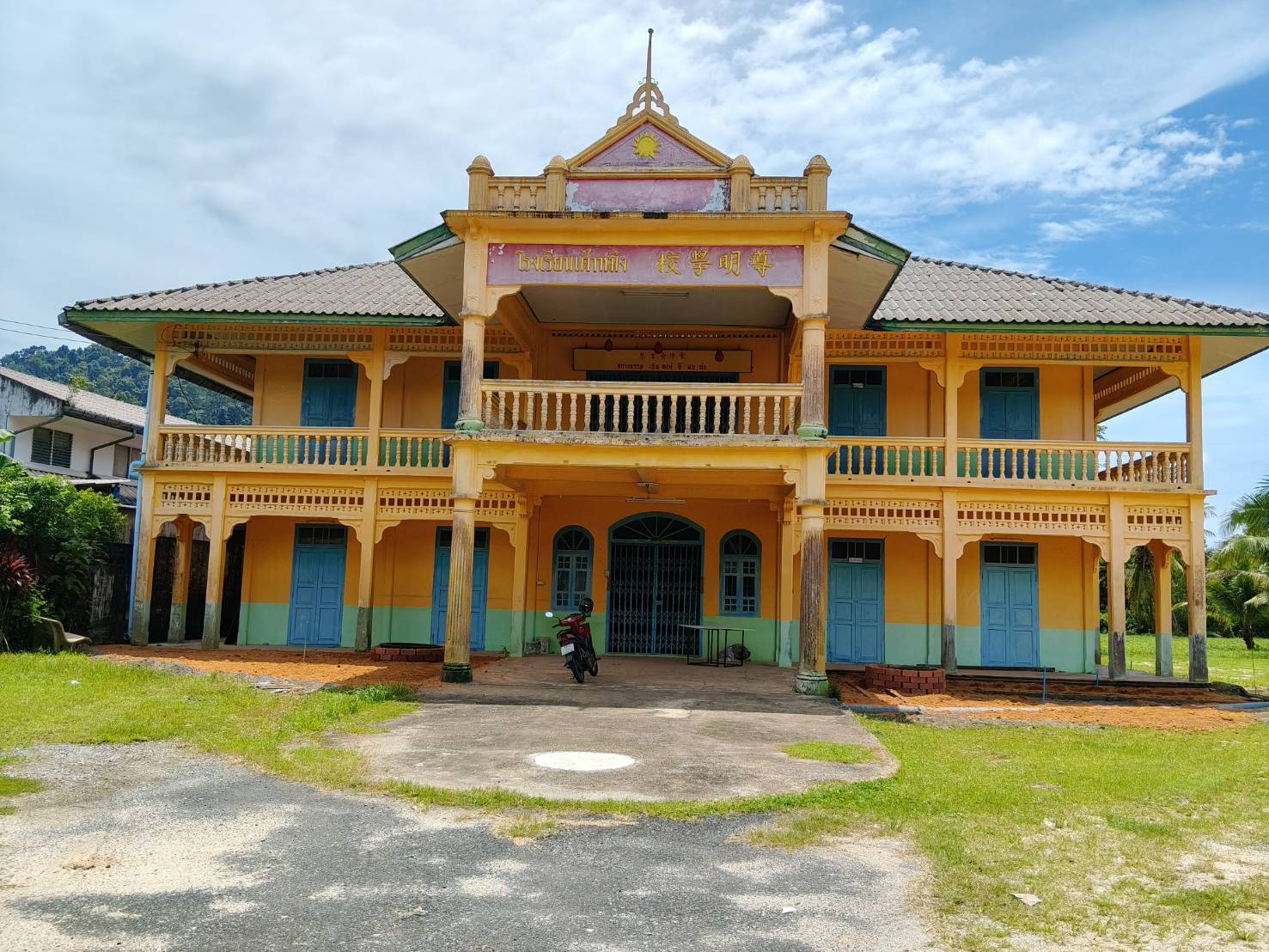
ความมั่งคั่งจากเหมืองแร่ดีบุกไม่ได้ถูกใช้ไปกับการสร้างที่พักอาศัยส่วนตัวเท่านั้น แต่ยังนำไปสู่การสร้างสถาบันของชุมชนด้วย อาคาร 'โรงเรียนเต้าหมิง' ซึ่งสร้างขึ้นใน พ.ศ. 2465 เป็นตัวอย่างที่ชัดเจนของการร่วมแรงร่วมใจกันในชุมชน
Funds for constructing this school came from fundraising among wealthy miners and Chinese merchants from the Old Town market, Yan Yao, Ranong, and Phuket. This shows the strong geographical and economic network of the Chinese community in this region.
The school building was built by Chinese craftsmen in an applied Sino-Portuguese style and operated as a primary school for a long time. It served as a center for passing on knowledge, language, and culture to generations of Thai-Chinese children in Takua Pa.
Even though the school has ceased its teaching operations today, the building is still maintained by the Takua Pa Tao Ming School Foundation, standing as a memorial to the community's commitment to education during the town's golden era.
From a tin dredger to a workers' bridge
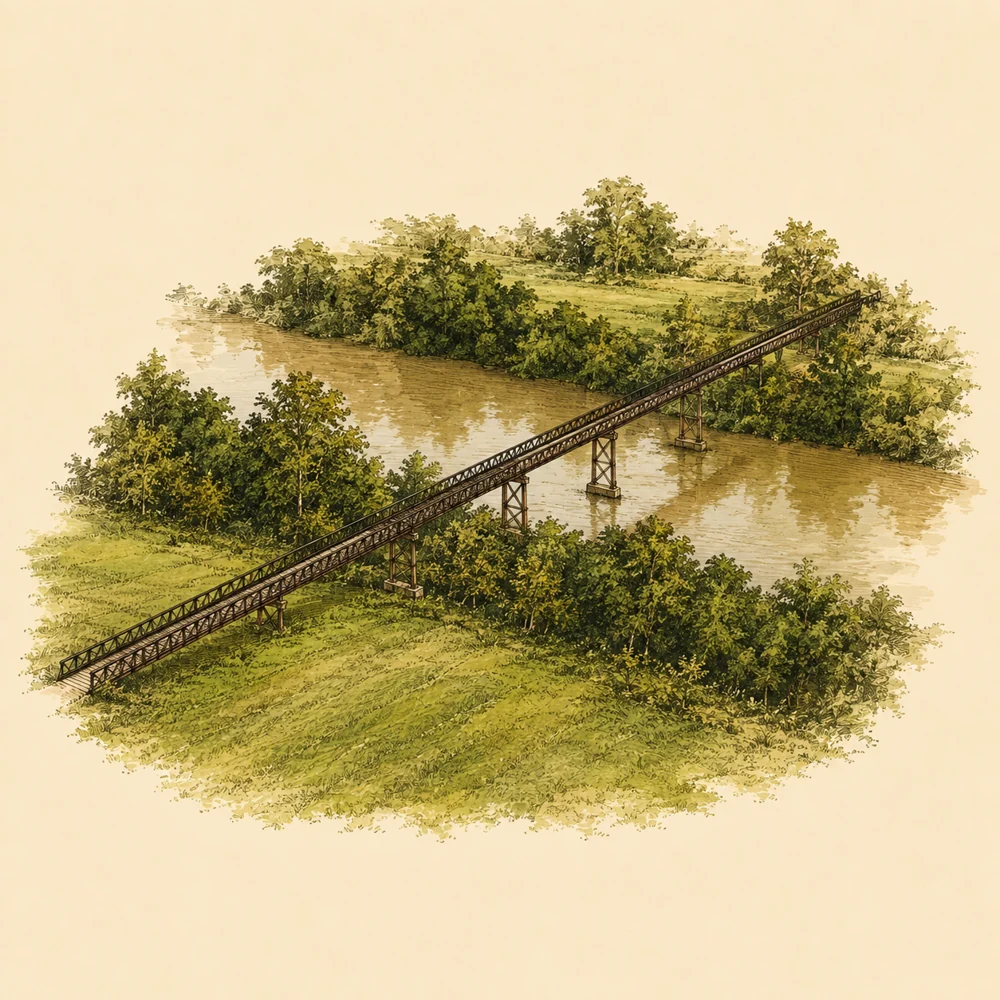
ในขณะที่บ้านพักและโรงเรียนสะท้อนถึงความมั่งคั่งของพ่อค้า 'สะพานเหล็กบุญสูง' กลับบอกเล่าเรื่องราวของยุคอุตสาหกรรมและชนชั้นแรงงาน สะพานแห่งนี้สร้างขึ้นใน พ.ศ. 2511 และเป็นผลผลิตโดยตรงจากอุตสาหกรรมเหมืองแร่ดีบุกของเมือง
Before the bridge existed, miners and villagers had to rely on rowboats to cross the Takua Pa Canal, which is over 40 meters wide, making it extremely difficult during the flood season. Although a wooden bridge for pedestrians and bicycles had been built, as the industry expanded, the demand for a stronger structure increased.
The Juti Boon Sung Dredging Company initiated the construction of this bridge by assembling the steel frames from a decommissioned dredger to form the Khok Khanun iron bridge, which is over 200 meters long. This bridge became an important shortcut connecting the Old Town market area to the mining area, facilitating labor and transportation.
Although the sound of mining machinery has long gone silent today, the iron bridge remains. It has changed its role from an industrial structure to a community thoroughfare and has become a major landmark that attracts people to visit the traces of the Takua Pa mining town.
Culture Street and shophouses brought back to life
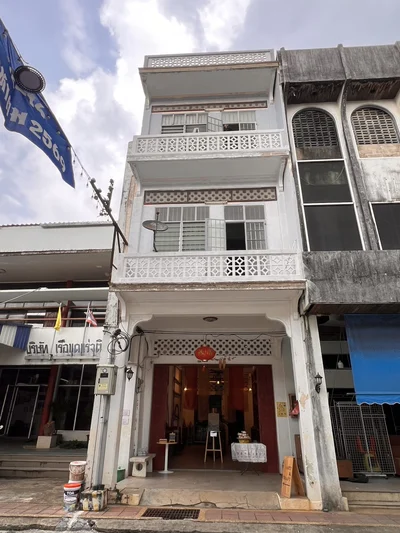
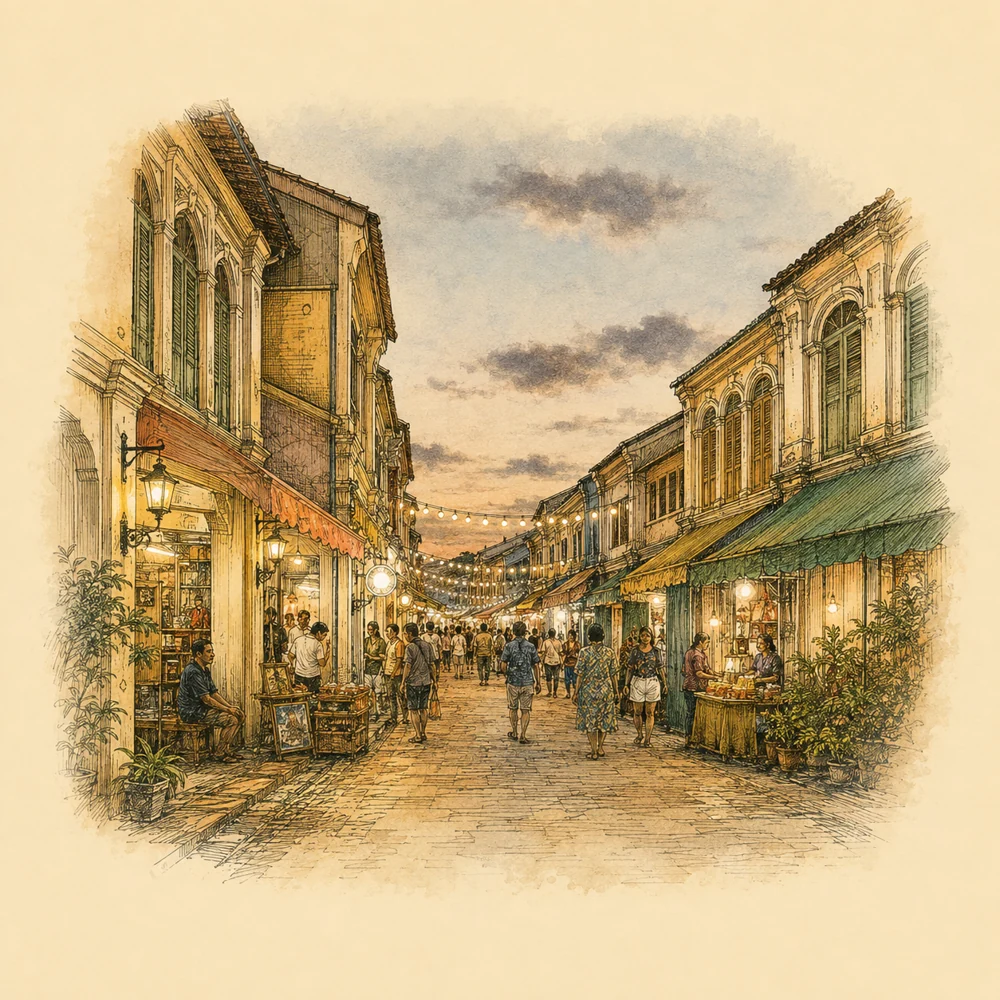
The shophouses along both sides of Udom Tara and Sri Takua Pa streets are the town's most prominent architectural heritage. These buildings were built to align with the commercial lifestyle, featuring ground-floor spaces for business and connected Ngo Ka Ki walkways. These buildings were influenced by Straits colonial architecture, reflecting the trade networks with Penang and Singapore.
After the tin mining industry declined and the town's commercial center moved away, this Old Town market area faced quietness. Many buildings were left to decay over time, as if the golden era of this street had passed.
แต่สถาปัตยกรรมที่ยังคงอยู่ได้กลายเป็นต้นทุนสำคัญในการฟื้นฟูย่านนี้ขึ้นมาใหม่ ประมาณ พ.ศ. 2550 ได้ริเริ่มโครงการ 'ตะกั่วป่า เมืองเก่า เล่าความหลัง' ซึ่งนำร่องการเปิดพื้นที่ถนนให้เป็นถนนคนเดินเชิงวัฒนธรรม ก่อนจะพัฒนามาเป็นถนนสายวัฒนธรรมเมืองเก่าตะกั่วป่าในปัจจุบัน
Every Sunday, this street is closed to traffic and opens as a bustling market. The old Sino-Portuguese buildings return to their role as a backdrop for community activities, including the selling of local food, crafts, and performances, proving that past architecture can find new life and roles in the present day.
Where to visit in person
Takua Pa Old Town Cultural Street
Governor’s Residence Wall
Boon Soong Iron Bridge
Khun In House
Tao Ming School
Missing data
- The exact years of construction for Ban Khun In and the Takua Pa governor's residence wall
- Documentary information on the later structural repair and restoration of the Boon Sung Iron Bridge
Sources
- โครงการกำหนดขอบเขตพื้นที่เมืองเก่า · เมืองเก่าตะกั่วป่า · สำนักงานนโยบายและแผนทรัพยากรธรรมชาติและสิ่งแวดล้อม · PDF หน้า 55 ถึง 58 · View sources (Accessed 2026-09-07)
- อาคารโรงเรียนเต้าหมิง · สผ. (ONEP) Cultural Art Environment Database · Significance/Characteristics section · View sources (Accessed 2026-09-07)
- Khun In building · สผ. (ONEP) Cultural Art Environment Database · Significance/Characteristics section · View sources (Accessed 2026-09-07)
- Governor’s Residence Wall · ศูนย์มานุษยวิทยาสิรินธร (องค์การมหาชน) · สาระสำคัญทางโบราณคดี · View sources (Accessed 2026-09-07)
- Thanon Watthanatham Mueang Kao Takua Pa · กรมการค้าภายใน · ระเบียนตลาด · View sources (Accessed 2026-09-07)