Then · Before · Now
ThenThe governor's camp wall in a tin-mining town by the sea route
พ.ศ. 2383·2424 (ค.ศ. 1840·1881)
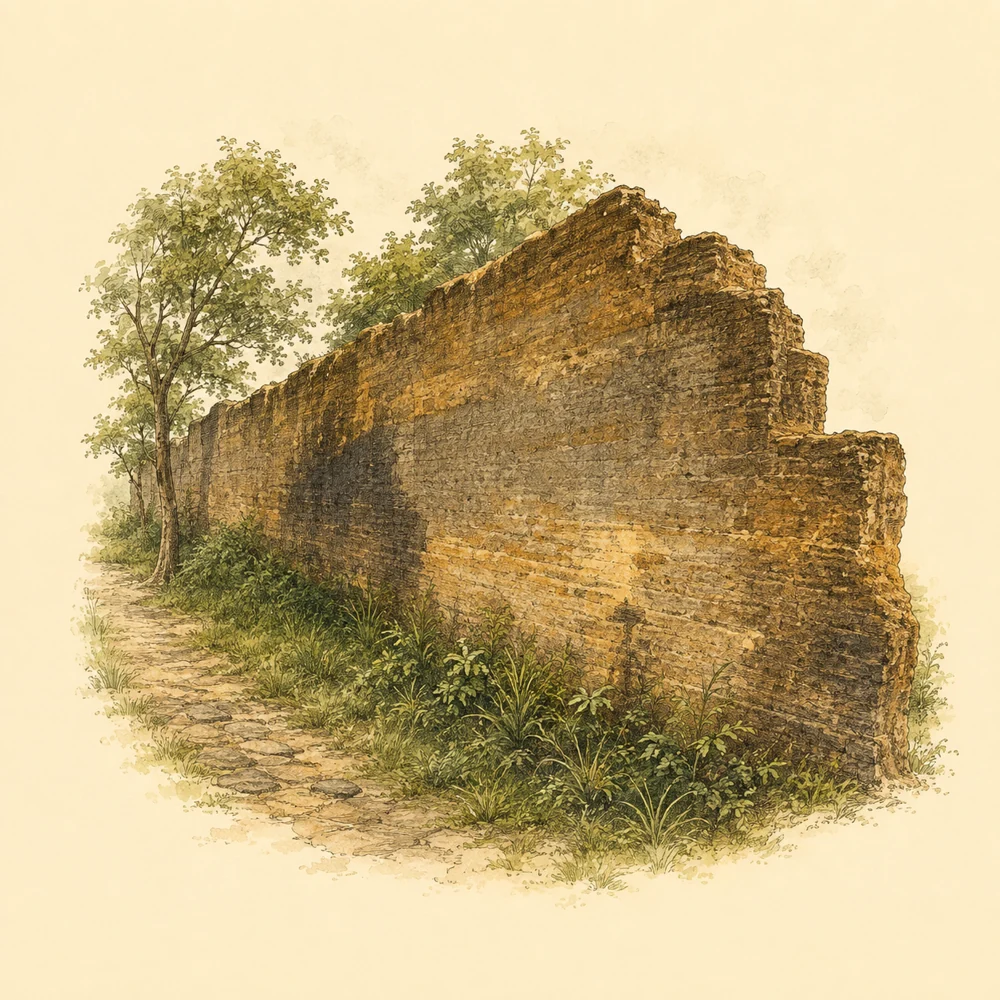
Verifiedกำแพงจวนเจ้าเมืองตะกั่วป่าน่าจะสร้างขึ้นในสมัยพระยาเสนานุชิต (นุช ณ นคร) เจ้าเมืองตะกั่วป่า ช่วง พ.ศ. 2383·2424 แต่แหล่งวิชาการยังไม่ระบุปีเริ่มก่อสร้างที่แน่นอน ตัวกำแพงล้อมจวนที่พักและพื้นที่ราชการ ทำหน้าที่คล้ายกำแพงค่ายสำหรับป้องกันอันตรายและเป็นที่หลบภัยของชาวเมือง
นี่คือช่วงที่ตะกั่วป่าเติบโตจากเศรษฐกิจเหมืองแร่ดีบุกและการค้าชายฝั่ง เมืองเก่าตั้งอยู่ริมแม่น้ำตะกั่วป่า ซึ่งเชื่อมกับทะเลอันดามันและเครือข่ายการค้าหลายชาติ ชุมชนจีนที่เข้ามาทำเหมืองและค้าขายมีบทบาทสำคัญ แต่ความขัดแย้งเรื่องผลประโยชน์เหมืองแร่ทำให้ต้องมีพื้นที่คุ้มกันที่มั่นคง กำแพงจึงเป็นทั้งบ้านของผู้ปกครองและเครื่องมือรักษาความสงบของเมือง
ผังภายในแบ่งเป็นวังหน้า ห้องโถง และวังหลัง มีประตูเชื่อมกัน ก่อด้วยปูนผสมกรวดทรายวางซ้อนเป็นชั้นและทำฐานกว้างกว่าตัวกำแพง ส่วนที่ยังสมบูรณ์สูงราว 5 เมตร หลักฐานจากการขุดค้นภายหลังพบเครื่องถ้วยจีนสมัยราชวงศ์ชิง เครื่องถ้วยยุโรป และวัสดุร่วมสมัย สะท้อนการติดต่อค้าขายของเมืองในยุคนั้น
BeforeFrom a lived-in residence to a historical site protected by the old town
พ.ศ. 2424·2568 (ค.ศ. 1881·2025)
Verifiedหลังพระยาเสนานุชิต (นุช) พ้นตำแหน่ง กำแพงและจวนยังใช้งานต่อในสมัยพระยาเสนานุชิต (เอี่ยม ณ นคร) ระหว่าง พ.ศ. 2424·2435 พระบาทสมเด็จพระจุลจอมเกล้าเจ้าอยู่หัวเสด็จตะกั่วป่าและทอดพระเนตรจวนแห่งนี้เมื่อ 28 พฤษภาคม ร.ศ. 109 หรือ พ.ศ. 2433
ต่อมาเมื่อมีการย้ายที่ตั้งเมืองไปเกาะคอเขาและบ้านย่านยาวในสมัยพระนราเทพภักดี (สิทธิ์ ณ นคร) จวนเดิมจึงหมดบทบาทราชการและน่าจะถูกทิ้งร้างตั้งแต่ช่วงนั้น แหล่งข้อมูลที่ตรวจสอบได้ไม่พบหลักฐานยืนยันว่ากำแพงถูกใช้เป็นกิจการอื่น หรือได้รับความเสียหายโดยตรงจากสึนามิ พ.ศ. 2547
กรมศิลปากรขึ้นทะเบียนเป็นโบราณสถานและกำหนดเขตที่ดินในราชกิจจานุเบกษา เล่ม 113 ตอนพิเศษ 50 ง วันที่ 18 ธันวาคม พ.ศ. 2539 ต่อมาขุดแต่งและขุดค้นใน พ.ศ. 2542 ก่อนมีการบูรณปฏิสังขรณ์และปรับภูมิทัศน์ในระยะหลัง แหล่งปัจจุบันระบุว่ากำแพงมั่นคงขึ้น แต่ยังมีวัชพืชและรากไม้บางจุดที่ต้องดูแล
NowA living historical site: the old wall becomes Takua Pa's stage
2569 / 2026
Verifiedปัจจุบันกำแพงจวนเจ้าเมืองตะกั่วป่าเป็นโบราณสถานที่ยังเปิดให้เข้าชมทุกวันโดยไม่เสียค่าเข้าชม ฐานข้อมูลแหล่งโบราณคดีระบุหน่วยงานดูแลร่วม ได้แก่ กรมศิลปากร เทศบาลเมืองตะกั่วป่า และตระกูล ณ นคร ภายในมีสนามหญ้าและทางเดินบางส่วน พร้อมป้ายข้อมูลของกรมศิลปากรและการท่องเที่ยวแห่งประเทศไทย
พื้นที่ไม่ได้ทำหน้าที่เป็นที่พักของเจ้าเมืองแล้ว แต่ยังทำหน้าที่เป็นหมุดหมายของย่านเมืองเก่าและพื้นที่ประกอบพิธี/กิจกรรมชุมชน ในช่วง พ.ศ. 2569 จังหวัดพังงาและเทศบาลเมืองตะกั่วป่าจัดงาน “จากตะโกลา สู่ตะกั่วป่า ครั้งที่ 12” ที่จวนฯ ระหว่าง 28 กุมภาพันธ์·3 มีนาคม มีการแสดง โขน โนรา หนังตะลุง พิธีบวงสรวงและเจริญพระพุทธมนต์ รวมถึงจำหน่ายอาหารพื้นบ้านและสินค้า OTOP
การใช้พื้นที่ร่วมสมัยจึงเป็นการท่องเที่ยวเชิงมรดกและการเรียนรู้วิถีคนตะกั่วป่า ขณะเดียวกันสภาพกำแพงบางช่วงยังชำรุดและมีพืชยึดเกาะ แหล่งทางการที่ตรวจสอบได้ยังไม่ประกาศโครงการบูรณะระยะใหม่หรือรายละเอียดงบประมาณเฉพาะสำหรับ พ.ศ. 2569
Dot timeline
- Verified
พ.ศ. 2383
Began during the time of Phraya Senanuchit (Nuch)
It is suggested, not settled, that the construction of the wall surrounding the residence and official area began to defend against enemies and chaos from tin mining conflicts.
Read source ↗ - Verified
พ.ศ. 2424
The residence was still in use during the next governor's time
Phraya Senanuchit (Iam na Nakhon) became the governor, and the use of the residence area continued until 1892, according to documents summarised by the archaeological database.
Read source ↗ - Verified
28 พฤษภาคม ร.ศ. 109
King Rama V viewed the governor's residence
King Chulalongkorn visited Takua Pa and viewed this governor's residence.
Read source ↗ - Verified
พ.ศ. 2435
Lost its role when the town centre moved
When the town location moved to Ko Khao Island and Ban Yan Yao, the former residence was no longer in use and was likely abandoned from this period.
Read source ↗ - Verified
18 December 1996 (2539)
Registered as a historical site
The Fine Arts Department announced its registration and designated the historical area in the Royal Gazette.
Read source ↗ - Verified
พ.ศ. 2542
Archaeological excavation
Qing dynasty Chinese ceramics, European ceramics, pottery fragments, glassware, and architectural decorative pieces were found.
Read source ↗ - Verified
28 กุมภาพันธ์·3 มีนาคม 2569
The residence as an old town event space
The 12th 'From Takola to Takua Pa' event was held, featuring performances, ceremonies, and a local food and OTOP goods market.
Read source ↗
No image authorized for publication yet
Highlights to see
Ancient wall line
Not verifiedSee the intact parts of the wall, about 5 meters high, and the sections damaged by time.
Read source ↗Three-part layout
Not verifiedObserve the division into the front palace, the hall, and the rear palace, complete with connecting doorways.
Read source ↗Construction technique
Not verifiedNotice the layers of lime mixed with gravel and sand, and the wall's base which is wider than the wall itself.
Read source ↗Information boards
Not verifiedThere are historical information boards from the Fine Arts Department and the Tourism Authority of Thailand at the front.
Read source ↗Old town context
Not verifiedLocated on Udomthara Road on the west bank of the Takua Pa River and near Wat Na Mueang (a local temple).
Read source ↗News and updates
2026-02-28 · สถานีวิทยุกระจายเสียงแห่งประเทศไทย
Phang Nga hosts the 12th 'From Takola to Takua Pa' event
เทศบาลเมืองตะกั่วป่าจัดกิจกรรมส่งเสริมการท่องเที่ยวเมืองเก่าที่จวนเจ้าเมืองตะกั่วป่า ระหว่าง 28 กุมภาพันธ์·3 มีนาคม 2569
Read source ↗Did you know
VerifiedThe wall has a rectangular layout and its interior is divided into the front palace, the hall, and the rear palace.
Read source ↗VerifiedExcavations found both Qing Dynasty Chinese ceramics and European ceramics in the same site.
Read source ↗ Getting there
Takua Pa Town
Not verifiedFrom the Takua Pa Town Municipality office, take Rat Bamrung Road, turn right onto Montri 2 Road, then turn left onto Si Takua Pa Road. Go straight for about 260 meters to find the historical site on your left.
Read source ↗Phuket
Not verifiedNo specific route or distance from Phuket was found in the verified sources.
Read source ↗Khao Lak
Not verifiedNo specific route or distance from Khao Lak was found in the verified sources.
Read source ↗Airport
Not verifiedNo specific departure airport or distance was found in the verified sources.
Read source ↗Nearby and similar places
FAQ
Admission fee
No admission fee
Getting there from Takua Pa Town
From the Takua Pa Town Municipality office, take Rat Bamrung Road, turn right onto Montri 2 Road, then turn left onto Si Takua Pa Road. Go straight for about 260 meters to find the historical site on your left.
What is the history of this place?
แหล่งนี้มีอายุทางโบราณคดีอยู่ในช่วง พ.ศ. 2383·2424 (ค.ศ. 1840·1881) สันนิษฐานว่าสร้างในสมัยพระยาเสนานุชิต (นุช ณ นคร) เจ้าเมืองตะกั่วป่า เพื่อเป็นกำแพงล้อมรอบจวนและป้องกันศัตรู
What are the highlights to see?
ชมกำแพงส่วนที่ยังสมบูรณ์ สูงประมาณ 5 เมตร และส่วนที่ชำรุดตามกาลเวลา สังเกตการแบ่งพื้นที่เป็นวังหน้า ห้องโถง และวังหลัง พร้อมช่องประตูเชื่อม เห็นชั้นวัสดุปูนผสมกรวดทรายและฐานกำแพงที่กว้างกว่าตัวกำแพง
Data Sources
| Name | Type | Date accessed | Link |
|---|
| ฐานข้อมูลแหล่งโบราณคดีที่สำคัญในประเทศไทย: กำแพงจวนเจ้าเมืองตะกั่วป่า | Other resources | 2026-09-07 | Open source ↗ |
|---|
| เมืองตะกั่วป่า · ศูนย์ข้อมูลชุมชน ศมส. | Other resources | 2026-09-07 | Open source ↗ |
|---|
| แหล่งศิลปกรรมอันควรอนุรักษ์: ตะกั่วป่า | Official agency | 2026-09-07 | Open source ↗ |
|---|
| ฐานข้อมูลแหล่งโบราณคดีที่สำคัญในประเทศไทย (ศูนย์มานุษยวิทยาสิรินธร) | Other resources | 2026-09-07 | Open source ↗ |
|---|
| สำนักงานสิ่งแวดล้อมศิลปกรรม (Cultural Environment Office) ONEP: Takua Pa Arts and Cultural Environments | Official agency | 2026-09-07 | Open source ↗ |
|---|
| สถานีวิทยุกระจายเสียงแห่งประเทศไทย (Radio Thailand) | News | 2026-09-07 | Open source ↗ |
|---|
| Wongnai: รูปกำแพงเมืองเก่าตะกั่วป่า | Blog | 2026-09-07 | Open source ↗ |
|---|
Missing data
- No specific postal code was found in the verified sources.
- ไม่พบเวลาเปิด·ปิดที่แน่นอน แหล่งทางการระบุเพียงเข้าชมได้ทุกวัน
- No direct phone number, Facebook page, website, or LINE account for the site.
- No verified information on parking fees, restrooms, or accessibility for the elderly or wheelchairs.
- No verified information that the wall is a direct Sino-Portuguese architecture.
- No verified distance or travel time from Phuket, Khao Lak, or the airport.
- No verified images with usage rights found.
- ไม่พบหลักฐานที่ยืนยันปีเริ่มก่อสร้างแบบปีเดียว นอกจากกรอบ พ.ศ. 2383·2424
- No verified evidence that the wall was directly affected by the 2004 tsunami.
- No specific restoration project or budget details for 2026.
- No verified old photos with usage rights found.